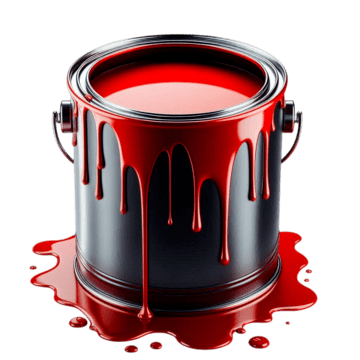
in the kitchen. The can of red paint is on the floor. In the middle of the kitchen. The can is sealed shut. It is essentially a brand-new can. Full, anyway. The floor of the kitchen is covered with old floating linoleum. It is patterned, and cheap. The pattern is composed of blue and green triangles. The triangles kiss. The colors run.
Tommy Joel Husk enters the kitchen. He is holding a screwdriver. It is a flathead screwdriver. He approaches the can of red paint. He is wearing old disposable clothes he can throw away after the task. He kneels next to the can of red paint. He jams the flat head of the screwdriver under the lip of the lid and pries it up.
The paint is very red. It has a strong smell. It smells red. It smells like the past. An unfingered past. Undipped. Untasted. Tommy Joel Husk places the lid on the linoleum with the wet red side facing up. The ceiling of the kitchen is composed of rough-hewn beams and white drywall. The beams are cocoa-colored and split with fissures. They have helped hold up the house for two solid centuries.
They creak and groan when strong winds blow, making him think of a ship at sea. He wonders about ocean voyages and leaving his life behind.
Tommy Joel Husk has no family and has never traced his genealogy. He inherited the house from his grandmother. He cannot remember her name. The house is old and Colonial. His grandmother had no one else to leave the house to so she left it to Tommy Joel Husk. He has lived in the house for sixteen years. He lives alone. He owned a dog for a while. It was a big Newfoundland dog. He no longer has a dog. He no longer remembers that dog’s name. Or where it went.
Tommy Joel Husk was addicted to meth for twelve upending years. He no longer uses the drug. He has remained clean for four years. He does not miss the madness. But sometimes he does.
There is a paint-tray next to the can of red paint. It is stained with the projects of the past. Tommy Joel Husk does not remember ever painting anything green but the color is clearly there. It is evidence. Dry, irrefutable dollops of sea-green frozen for all time. He does not become puzzled by the discovery. He does not dwell on the inexplicable. He tries to excise any futile considerations from his routine.
He surveys the wall closest to him. It was once white but years of standing in the kitchen have discolored it with smoke tones and shiny grease. It is the reason Tommy Joel Husk decided to paint today. To renew the walls. To refresh the space. Make red the unsightly beige.
He pours paint into the tray. It is slow and silent and glossy under the light.
There is a digital clock radio on the shelf over the sink and Tommy Joel Husk turns it on. He hears the last stanza of I Want a New Drug by Huey Lewis and the News. True Colors by Cyndi Lauper begins to play next. He grabs a broad paintbrush from the cupboard under the sink. The bristles are stuck together and stiff from previous jobs and he loosens them with his fingers. The fibers crackle as they relax.
He crouches on the floor and begins to paint.
The paint is thick and smooth. There is something satisfying about applying it to a vertical surface. The smell of the red paint hits him like an intoxicant. Like a slumbering bear held in blind hibernation. Like fresh powdered snow covering a muddy meadow. Like leaves in the trees recast with an autumnal blush.
He paints.
He paints until his shoulder grows sore. He paints until his vision is dyed bright carmine from the constant optic exertion. He paints until he starts to drift and dream.
The walls look good red. The color renews the room. Tommy Joel Husk approves of what he is doing. His satisfaction at his achievement makes him feel slightly pridefull and mighty. When he stands, both his knees pop like champagne corks and he feels a mute stiffness in his spine, as if he’d passed out across a railroad track. The whole day was like that.
He wobbles to the refrigerator with stiff limbs to search for something to drink.
He sees bottles of water and cans of Coke. He grabs one of the cans. He notices a leftover half a turkey sandwich and grabs that too.
He sits at the small kitchen table to eat his lunch. The strong smell of the paint tampers with the taste of the turkey. Behind him the radio starts to play Duran Duran’s Hungry Like the Wolf.
He hadn’t noticed how famished he’d become. Effort affects his appetite. He eats the sandwich with an artless ferocity and washes it down with the can of cola. He belches into the new red kitchen.
After the empty Coke can clangs into the recycling bin by the door, Tommy Joel Husk once again takes command of the paint brush. The top two feet of the walls aren’t red yet. He has placed masking tape along the line where the walls meet the ceiling. He has to reach up to apply the paint and it is not long before his shoulder begins to protest. He fights through the pain. He promised himself he’d finish painting the kitchen by five o’clock. It must be done today. Under Pressure by Queen tumbles from the clock radio.
The telephone begins to ring. Tommy Joel Husk does not want to answer it. He doesn’t want to talk. Verbalizing his thoughts always tests his nerves. His words sit calm and comfortable inside his mind but when they escape they reveal things. He hates to be heard. Words feel like farts after they hit the atmosphere.
Tommy Joel Husk answers the phone anyway. He says, Husk residence. It is an old-fashioned greeting that sounds off-putting and confuses people and that’s why he says it.
The voice on the other side of the wire begins to babble and breathe. It is Borg.
Duncan Borgnine, an old meth-addicted acquaintance. Tommy Joel Husk and Duncan Borgnine had enjoyed many toxic adventures together. They’d picked and hidden each other’s scabs, calculated white-hot math in the alley and laughed with contagious insanity. They were pipe brothers. Warriors on the front lines of selfish abuse. They screamed together, pissed together, and went stark-raving mad together one Tuesday at the Oblique Bowling Alley above Nutley St.’s Merging Curve of Death. Nearly died together. More than twice. A firm foundation built solely to prop the TWIN NEED that had already defined the two fast friends.
Borg says something with a questioning inflection. Tommy Joel Husk doesn’t know how to respond but he says, No. He feels confident in his answer. Any query from Borg automatically necessitates a negative reply. It is the safest thing to say.
Borg begins to plead and breathe. He sounds like he’s trying to swallow the phone. His desperate state triggers scrambled memories in Tommy Joel Husk. Just a Friend by Biz Markie spills from the radio.
Tommy Joel Husk tells Borg, No again and hangs up.
He returns to work.
By the time he finishes painting the kitchen his arm and his back are singing. He has splatters of red on his hands and face and his old clothes are ruined. He bangs the lid back on the paint can with a hammer. There is enough leftover paint for another project. Perhaps he will paint the bathroom. Tommy Joel Husk can’t recall ever seeing a red bathroom. It would be unusual. He likes the idea of two matching rooms.
He cleans the paintbrush in the sink. The red water swirling down the drain makes him think of a murder scene, although he has never been at a murder scene. As far as he can recall.
He washes his hands with gasoline, a trick he learned from Borg. Borg worked as a housepainter sometimes. The gasoline stings his cuticles. Once the stains are erased he soothes his hands under cool water.
Tommy Joel Husk sits at the kitchen table and admires his work. There are no drips, no holidays. The paint lines are precise. There isn’t a single errant red daub on the clean white ceiling. He did a magnificent job.
Into the Groove by Madonna begins to play on the radio and Tommy Joel Husk feels triumphant and happy to be home.
 Crumbling Asphalt